
Automation
The Unseen Force: Mastering Greenhouse Airflow with HAF and VAF Systems
A misunderstood greenhouse environment is often a direct consequence of poor air movement. Understanding how to control airflow can help growers prevent stagnant pockets, stabilize climate and create more consistent conditions.
Key takeaways
Effective airflow is a foundation for predictable climate control. HAF supports consistent air mixing, while VAF can help target vertical circulation and stratification. Choose the system that matches your crop, structure and operating goals.
For growers, air is a resource that must be managed. When air remains still, humidity and temperature can drift into pockets that are difficult to see until the crop is already under stress. Consistent movement helps the greenhouse behave as one environment instead of a collection of disconnected microclimates. Why still air is a crop killer Stagnant air can encourage uneven transpiration, moisture accumulation and inconsistent temperature. These conditions make it harder to maintain a predictable crop environment and can increase the distance between a problem and the moment it becomes visible. The goal is not simply to move more air. The goal is to move it in a repeatable pattern that supports the crop and works with the existing climate equipment.
The workhorses of greenhouse airflow
HAF vs VAF Horizontal Airflow Fans are commonly used to create a continuous circulation loop across the growing area. Vertical Airflow Fans approach the problem from another direction by moving air through the crop canopy and helping address vertical temperature differences. The best choice depends on the geometry of the facility, the crop canopy, the available equipment and the level of environmental control already in place.
Quick-decision guide: HAF, VAF and hybrid
A quick guide for choosing an airflow approach.
Approach | Best for | Primary role | Considerations |
|---|---|---|---|
Horizontal airflow | Uniform greenhouse zones | Mixing and circulation | Fan placement and obstructions matter |
Vertical airflow | Tall or dense canopies | Vertical mixing | Match the system to canopy height and crop density |
Hybrid | Complex facilities | Targeted climate consistency | Coordinate schedules with the climate strategy |
Swipe the table sideways to see more →
Your action plan: from theory to proof
A practical action plan 1. Map the zones. Identify where temperature and humidity behave differently across the facility. 2. Check the circulation pattern. Look for dead spots, blocked paths and equipment that works against the intended movement. 3. Coordinate control. Use available climate and sensor information to make airflow part of the broader operating plan. 4. Review the result. Recheck the same zones after changes and use the evidence to refine the setup.
PRODUCT SPOTLIGHT
Control the environment with clearer information
Connect airflow decisions to the environmental signals that matter across the facility.
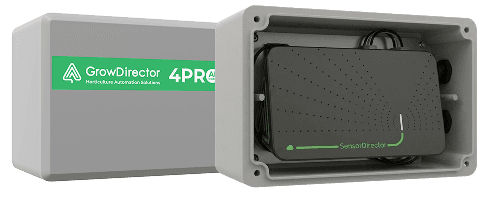
SensorDirector
Use SensorDirector to make environmental conditions easier to observe and act on.
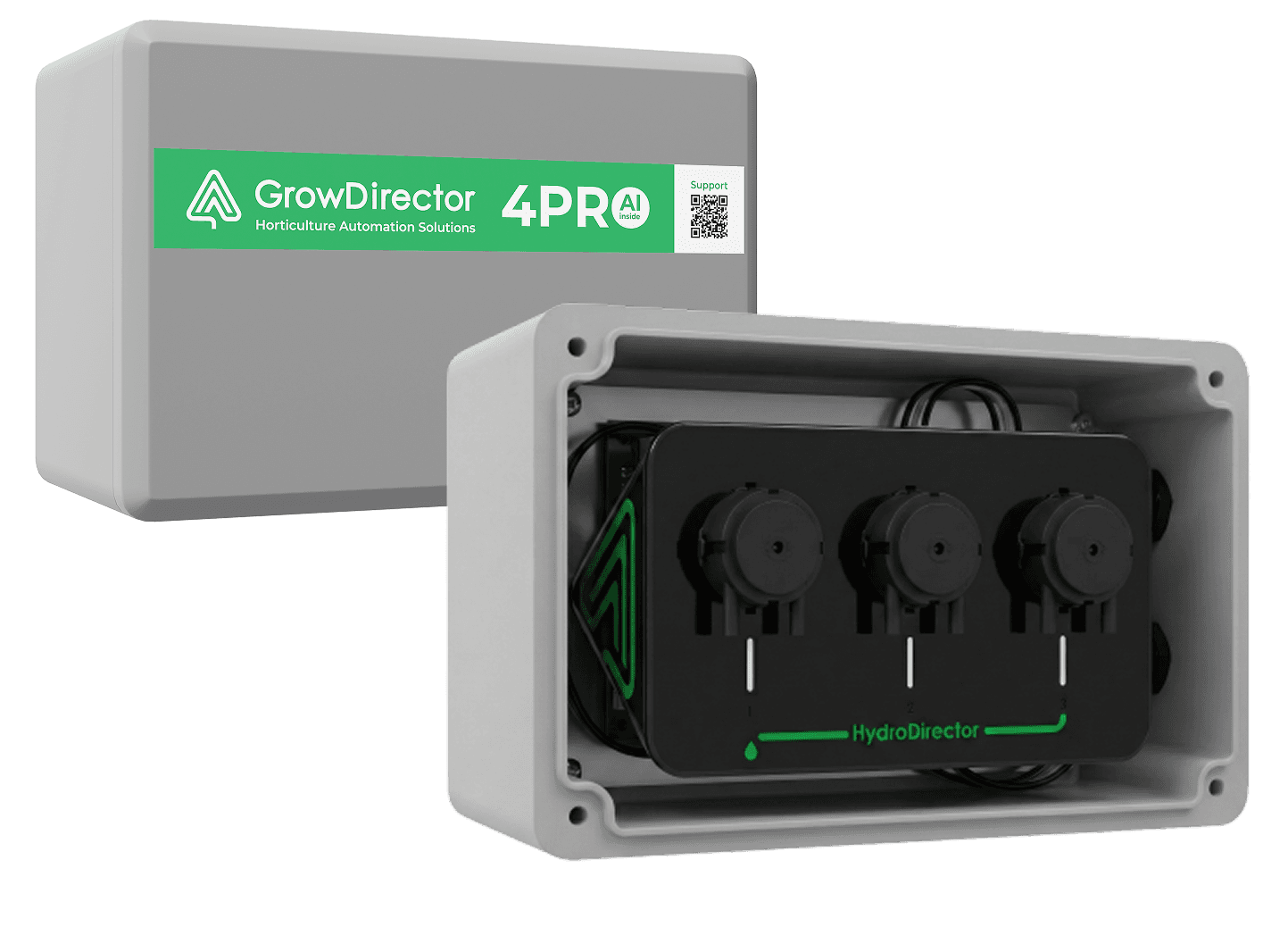
HydroDirector
Use HydroDirector to make environmental conditions easier to observe and act on.
KEEP GROWING WITH GROWDIRECTOR
Turn your airflow into a strategic climate tool
Turn airflow and environmental signals into clearer daily decisions for your operation.